Best Practices around PPE (Personal Protective Equipment)
CleanPrime probably isn't more toxic than any other industrial floor coating. But I love you too much not to go pretty hard on the safety stuff. You only got one body, bruh.
Epoxy accidents are rare. Epoxy sensitization isn't.
So, what gets people isn't one bad day — it's a thousand careless little ones. Epoxy resin and amine hardeners are some of the most sensitizing materials in the trades. Let them touch your skin enough times and your own immune system flips a switch it can't flip back. After that, you're allergic to all epoxy, everywhere, for good — and your career in this industry is finished. I've watched guys with real talent get chased out of the trade by a rash they couldn't shake. So understand the goal here: we're not protecting you from this afternoon. We're protecting the next twenty years.
Step 1: Create a Healthier Environment
Make the room move air in one direction: clean in, dirty out, never the same air twice. Three pieces do that.
Makeup air in. Open something on one side of the room so fresh air has a way in. Pull air out with no way for new air to enter and you choke the whole system — the machine just hums and moves nothing.
Directional flow across the work. Set it so the air travels past you and the wet coating and keeps going, instead of swirling around your head.
Vapor out, outdoors. A negative-air machine pushes the fumes through a duct to the outside — not back into the room. Recirculating cuts the smell but leaves the vapor. That's lipstick on a problem.
Run the room at slight negative pressure so vapor sneaks out the cracks instead of into the rest of the house, and put the exhaust well clear of doors, windows, HVAC intakes, and people. You haven't solved anything if you're just feeding the fumes to the family in the living room.
For the machine: you want a negative-air scrubber with a HEPA stage and an activated-carbon stage ahead of it — HEPA grabs particulate, carbon absorbs the solvent vapor and odor. I ran Lavina scrubbers as a contractor (mine took 16x20 filters); there are better deals out there now, so shop it. What matters is that it takes a carbon pre-filter sized to fit and moves enough air for the room. Again, this is up to you, but here’s my best recommendation as of June 2026. Buy locally when possible - internet retailers linked to the pictures if you need them.
Get some of the air movers pictured below. Outfit them with HEPA/Activated Carbon Filter. Get enough ductwork to get the fume out.
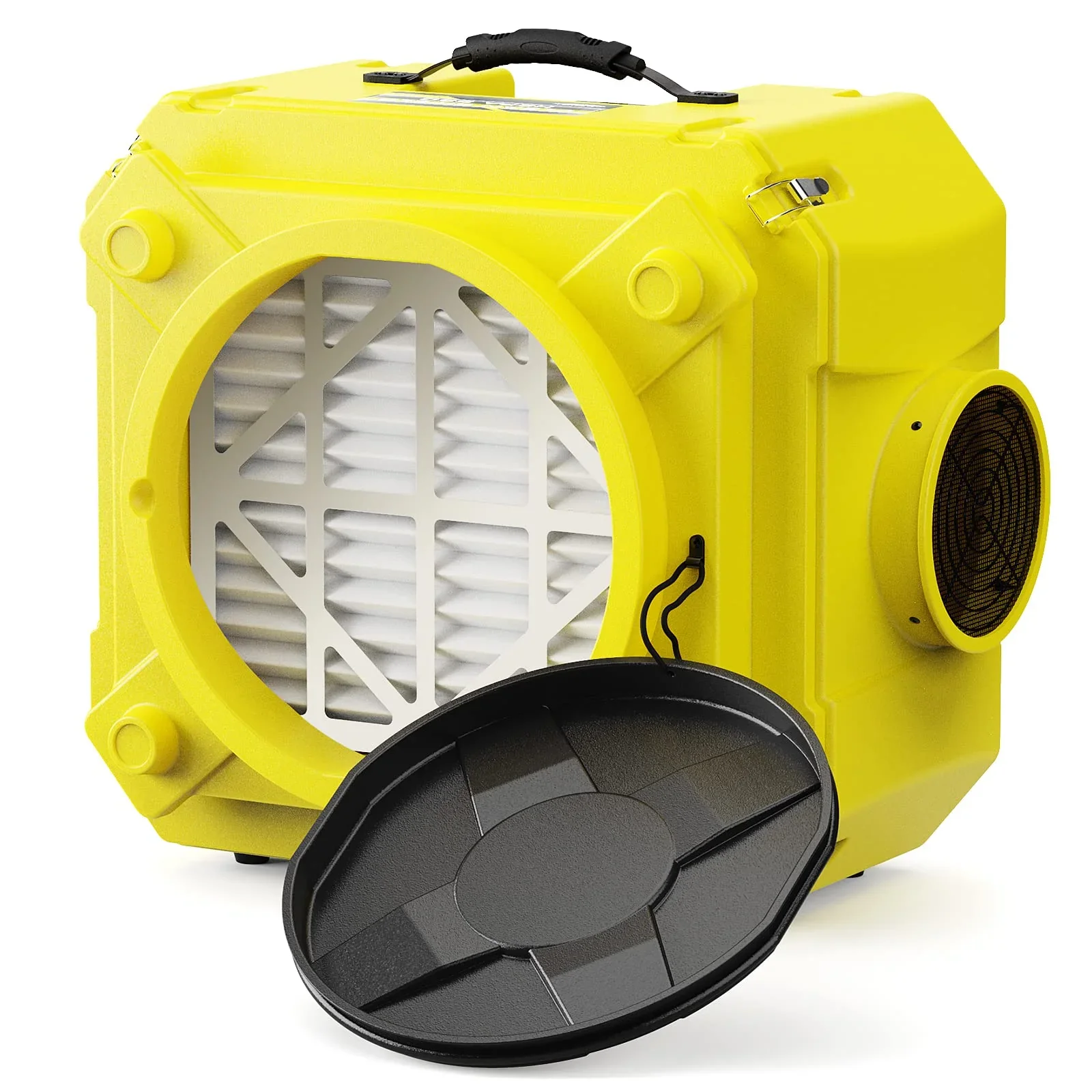


Double check your equipment WHEN IT COMES BACK TO THE SHOP (so you're good to go for the next one ) and do the job like a true professional.
One honest limit on carbon: it absorbs vapor until it's full, then quietly quits on you. It's a helper, not a hero. When the odor starts climbing back, the carbon's spent — swap it.
Keep the ducting as short and straight as possible — 20 to 25 feet of flex, insulated or reinforced if you've got it, and few bends. Every elbow steals airflow.
And remember this stuff is flammable — the acetone in it flashes well below freezing. Solvent vapor is heavier than air, so it sinks and pools down low where your nose never finds it. Before you open a kit, kill every ignition source in the space: pilot lights, water heaters, space heaters, anything that throws a spark when it cycles. Good directional airflow is also what keeps vapor from ever building to the point where a stray spark matters.
Step 2: Protect your lungs
Air first, respirator second. In a well-scrubbed open room, a properly fit-tested respirator with organic-vapor cartridges carries you.
Your nose is the gauge. Smell solvent inside the mask and the cartridge has broken through — change it right then, not at lunch. Cartridges keep drinking in contaminants on the shelf too, so store them sealed in a bag or they'll be half-dead before you strap them on.
Experts say these don’t work unless you’re clean shaven. If your wife likes your beard so much that you rather risk it with nothing than shave, still wear these with a beard. Your safety is up to you. Do be dumb with all this.
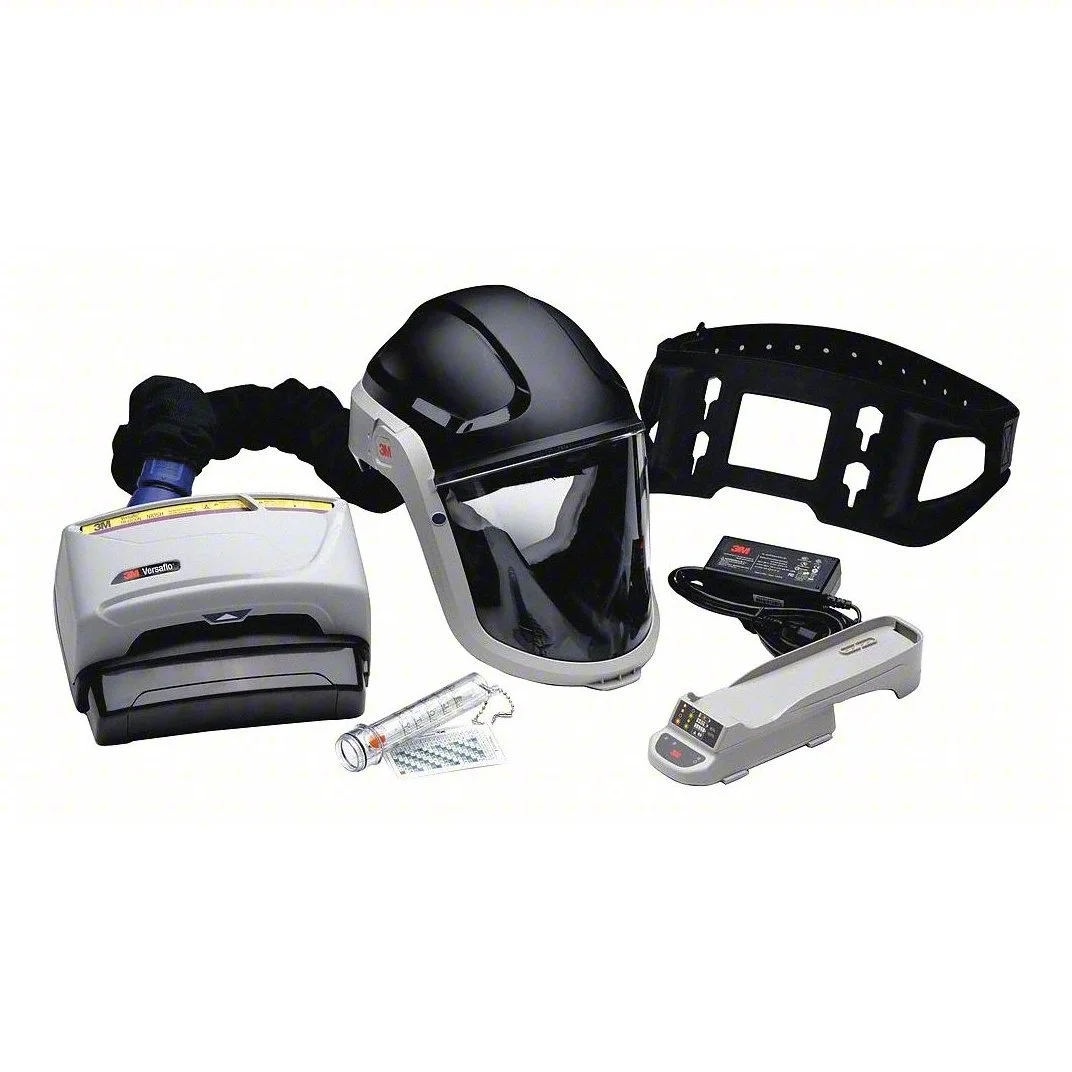
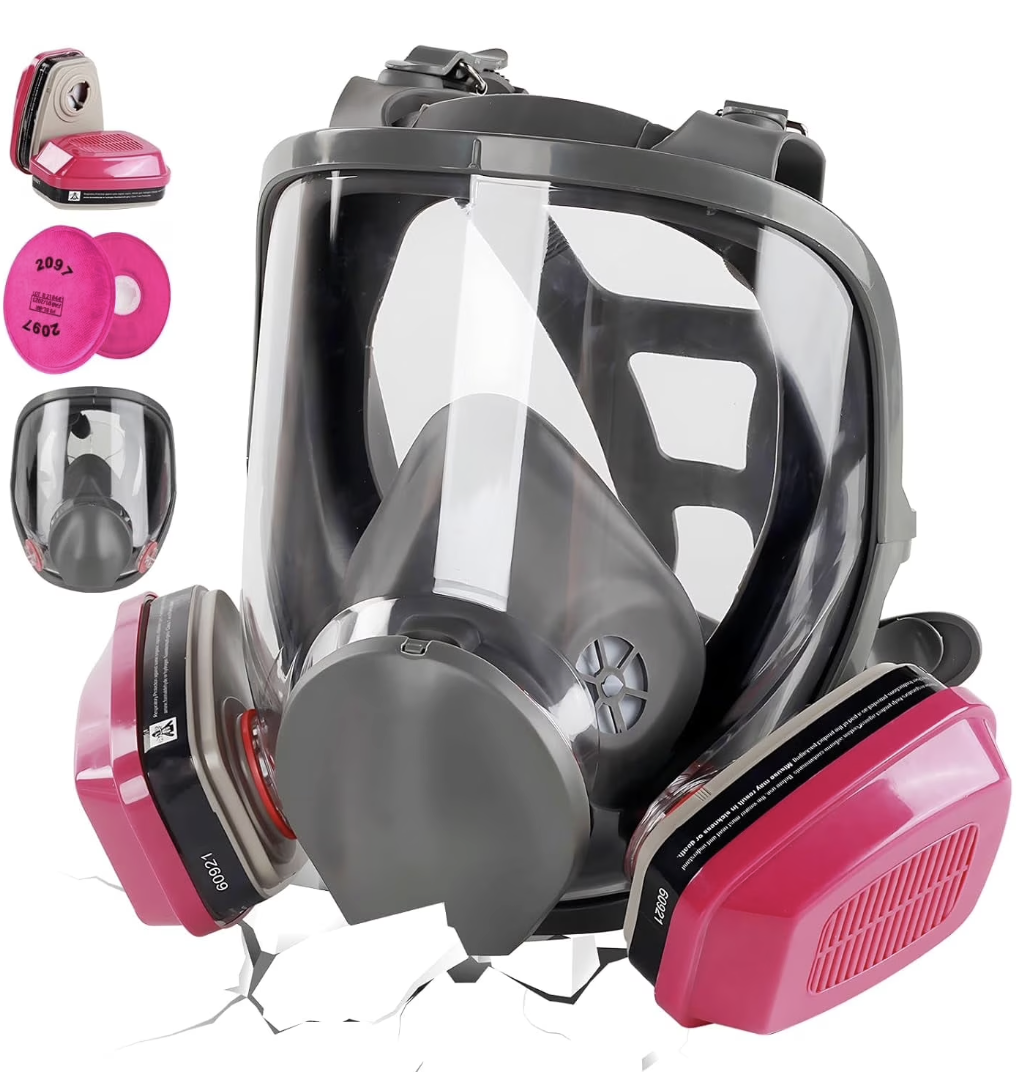
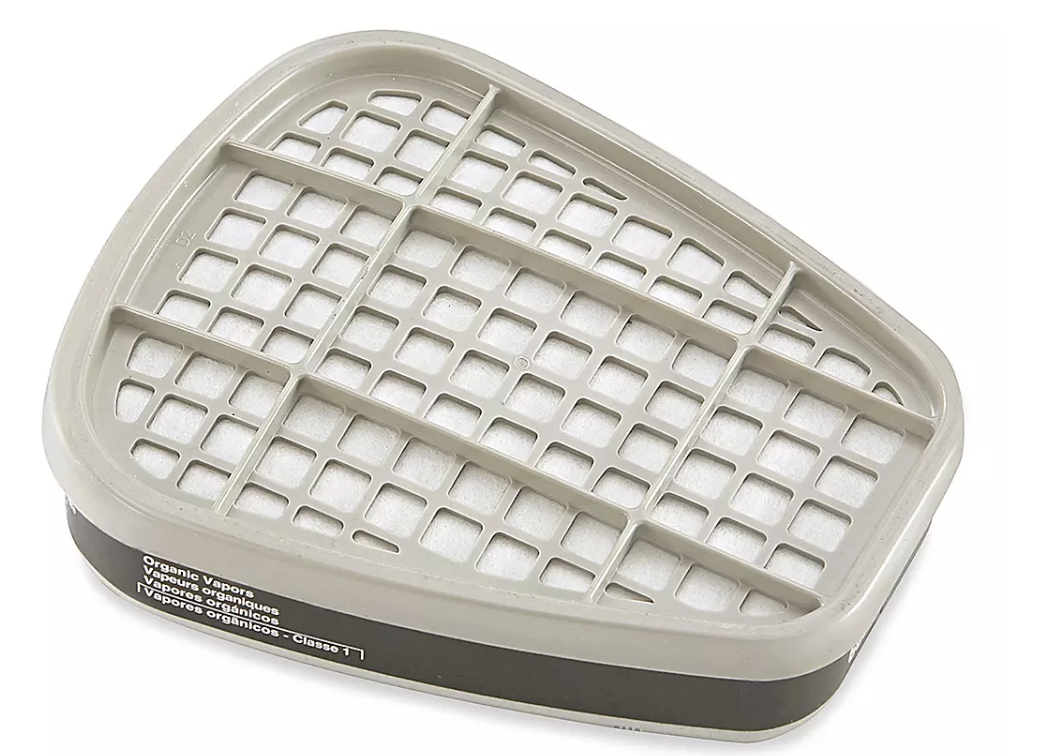
In a tight basement, an occupied house, or anywhere the air just won't move, step up to a PAPR. Lots of options, the best we have found is 3M Versaflo TR-600-HIK — Grainger item # 38HX31
These are not cheap, but you only get one body. Take really good care of it. Any time you are applying coatings without directional airflow, you should be operating with the PAPR.
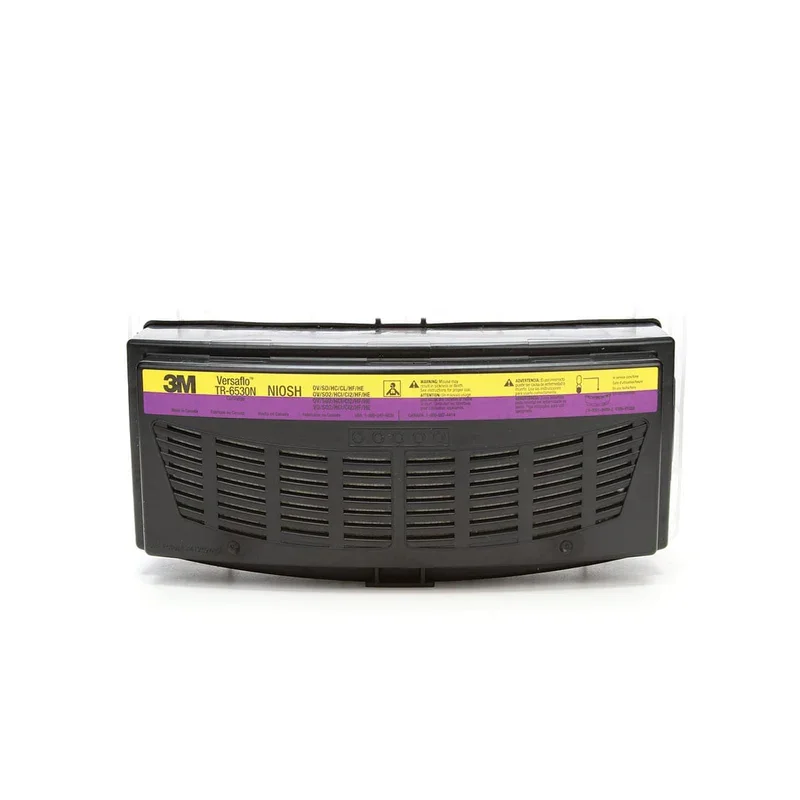
NOTE! Not every Versaflo kit ships with an organic-vapor cartridge. Make sure the filters you start with and replace with as needed are OV/AG/HE like the HIK's TR-6530N pictured above.
Step 3: Protect your skin
Gloves always — but thin nitrile is not a force field. Epoxy, amine, and solvent all work their way through cheap gloves given time.
7mil avaialbe at neighborhood Farrell Calhoun - wear this at minimum - Support your local decorative concrete supply house whenever you can. 9MM from Harbor Freight linked as the online retailer (best price I've seen - quality is good). Bottom line up front: buy more than you think you'll need. Change gloves often, keep one hand clean whenever possible, and never clean contaminated gloves with solvent. Fresh gloves are cheap insurance against contamination, skin exposure, and coating defects. Tyvek Suits keep you safer and looking fresh when you go to lunch (you don’t have to wear your “epoxy pants” if your “fancy pants” are under a suit all day. You ought to be wearing a PAPR or full-face respirator, so best practices around safety glasses are only on this page regarding cutting termination lines before you start chemical prep.
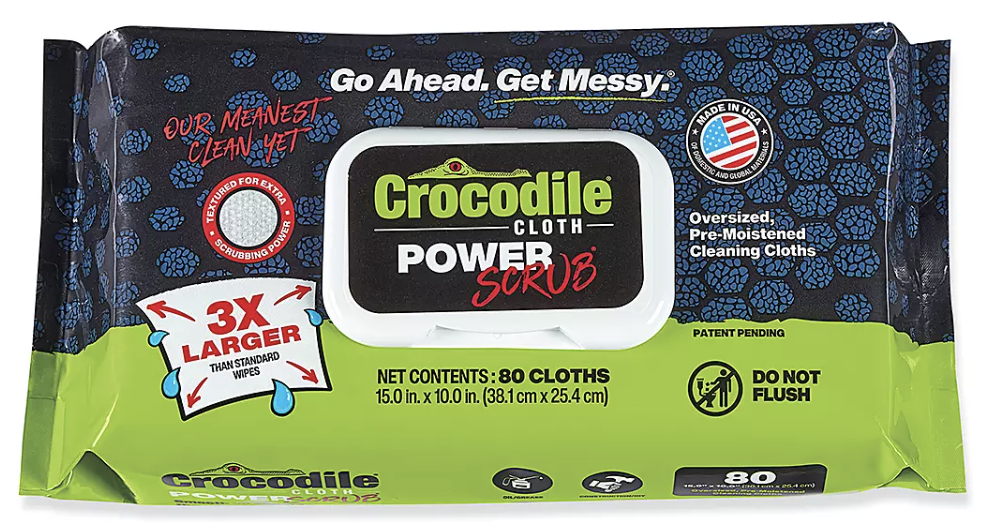
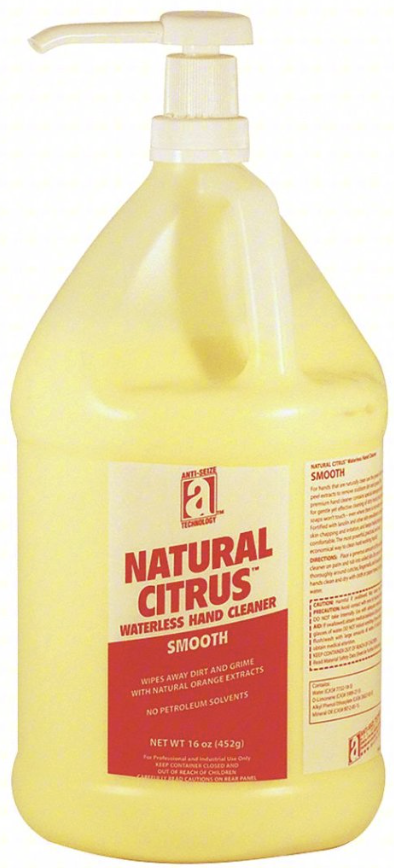
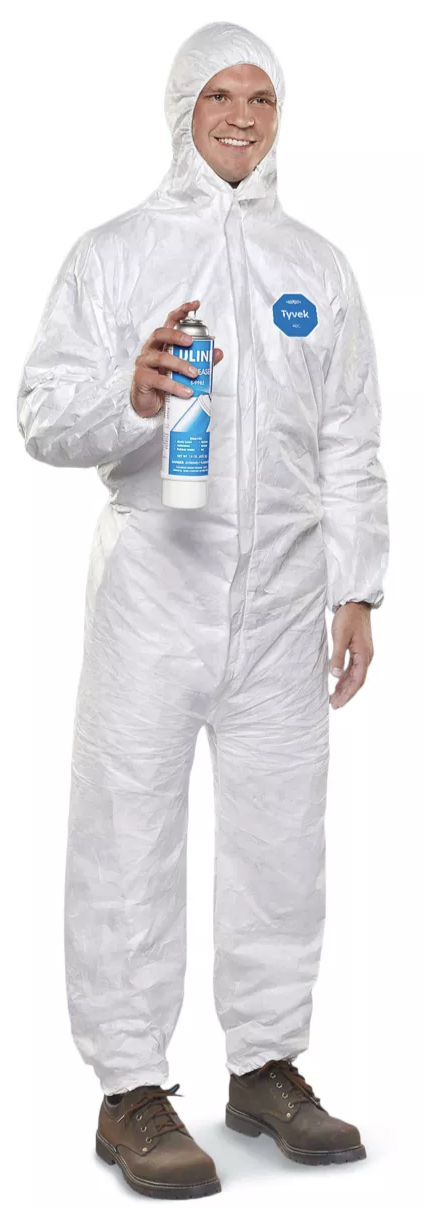
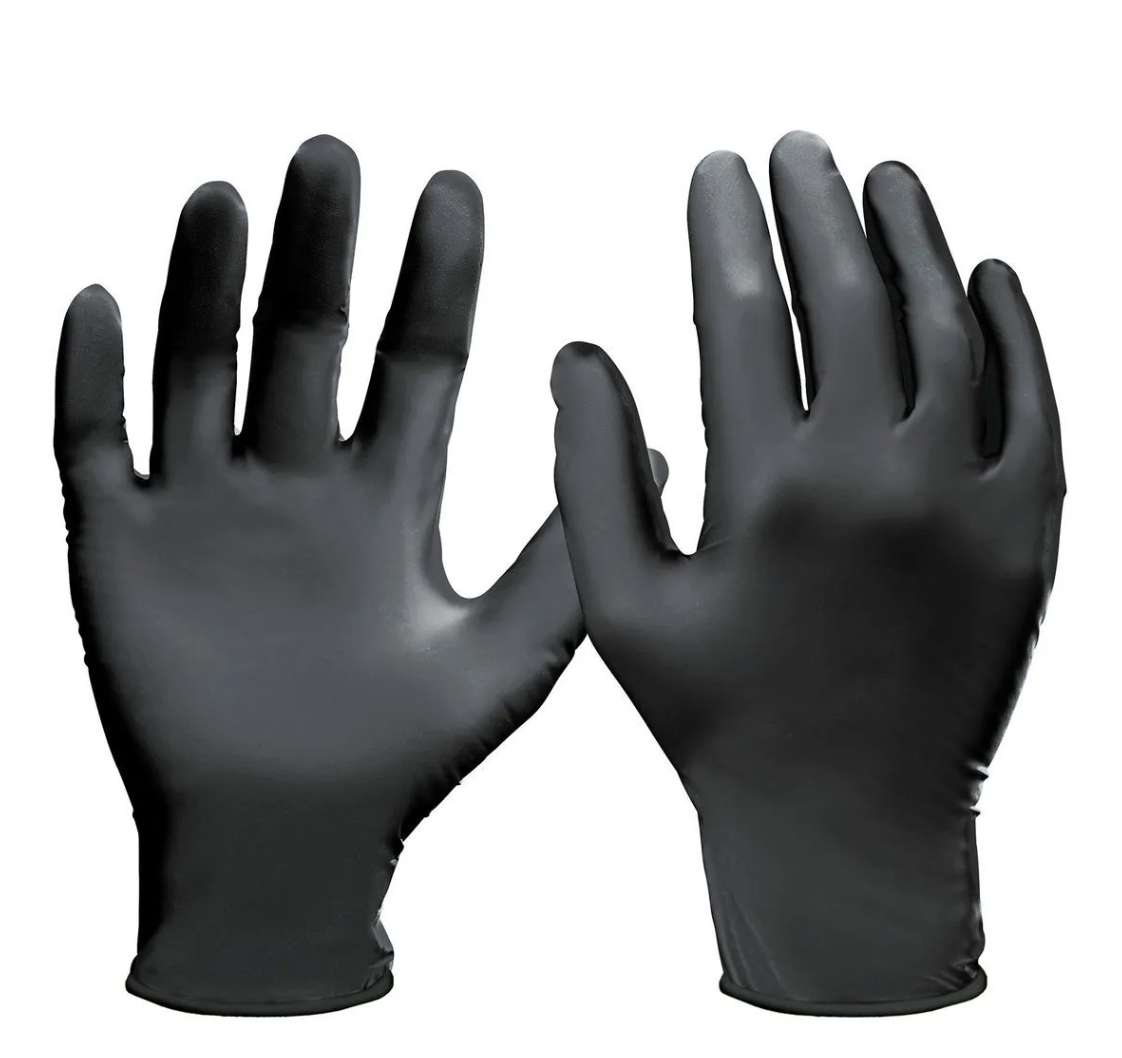
Here are some pro tips:
Put a glove over a door handle before you even start.
Double up on the gloves in general - it's easier to replace an outer glove that ripped than re-applying a glove to a sweaty hand.
Keep a "Clean Hand" and a "Dirty Hand": When opening doors, touching phones, adjusting respirators, or grabbing tools: One hand touches coating materials. One hand stays clean. This dramatically reduces contamination spread. You may get to where you unconsciously do this.
If you're coating overhead, "Roll the Cuff": fold the cuff outward 1–2 inches.This creates a "drip dam" that catches material running down your arm instead of funneling it into the glove.|| Buy Black Gloves Partly because they look cool. More because you can better see: dust, moisture, holes, and residue.
Keep Three Boxes Open: and staged at different areas of the job (taped to something with one line of tape above the hole where the gloves come out and another below it).
If you do get epoxy on your skin, DO NOT reach for acetone to wipe it off. SERIOUSLY. Solvent strips your skin's natural barrier and drives the epoxy deeper — you're not cleaning it off, you're pushing it in. Crocodile Wipes are sold at Farrell Calhoun; Auto Parts Stores have good waterless hand cleaners for nasty stuff. Online retailers linked to pictures like always.
Handle the waste professionally
Two things in this product bite after you've stopped paying attention.
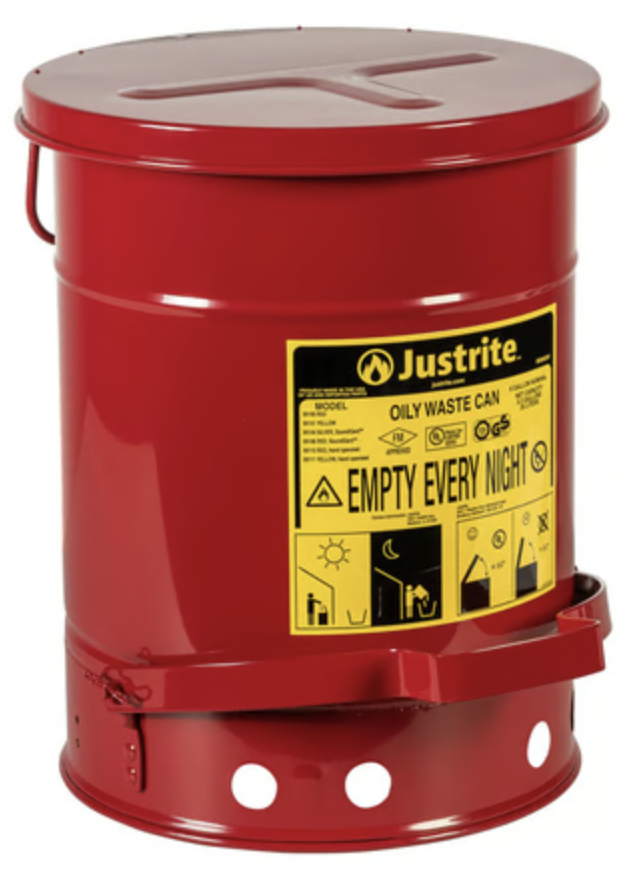
First, heat. Mixed epoxy doesn't just sit quietly — it reacts, and a leftover mass in a bucket can build enough heat to smoke or scorch. Solvent-soaked rags are their own fire. Don't pile either in a corner and walk off: spread thin scraps so they cure out, and drop solvent rags in a sealed metal can. Once epoxy is fully cured it's inert and harmless — it's the wet, reacting, and solvent-wet stuff that's dangerous.
Second, water. CleanPrime is toxic to aquatic life, so it never goes down a drain, a storm sewer, the dirt, or a creek — not the product, not the rinse, not the tool water. Let it all cure solid, then dispose of the cured material and your spent cartridges by your local hazardous-waste rules.